Thank you for visiting SNEWPapers!
Sign up free
Commercial
September 5, 1879
Springfield Weekly Republican
Springfield, Hampden County, Massachusetts
What is this article about?
The Pacific whaling industry has declined sharply from 600 vessels in 1855 to 40 in 1879 due to petroleum introduction, falling whale oil prices, vessel losses, and whale scarcity. Now centered in San Francisco, the fleet employs 700 men, yielding about 15,000 barrels of oil and 70 tons of whalebone annually, mainly in the Arctic. Shore stations operate along California, targeting gray whales.
Clipping
OCR Quality
98%
Excellent
Full Text
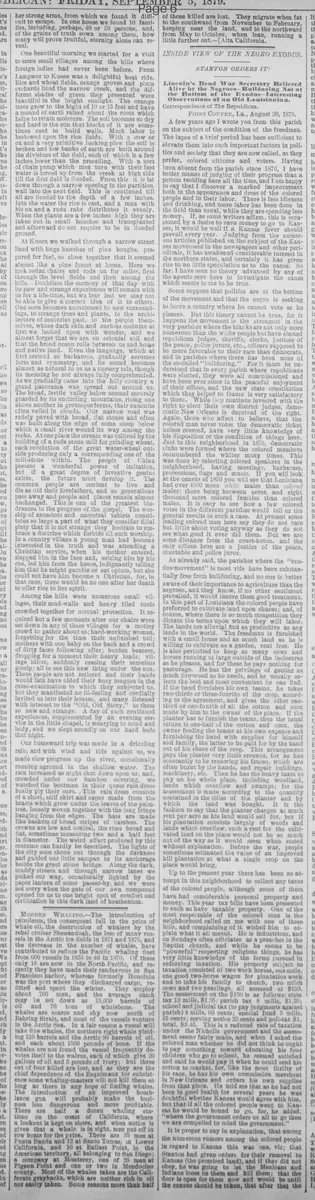
MODERN WHALING.—The Introduction of petroleum, the consequent fall in the price of whale oil, the destruction of whalers by the rebel cruiser Shenandoah, the loss of many vessels in the Arctic ice fields in 1871 and 1876, and the decrease in the number of whales, have contributed to reduce the Pacific whaling fleet from 600 vessels in 1855 to 40 in 1879. Of these only 18 are now in the North Pacific, and recently they have made their rendezvous in San Francisco harbor, whereas formerly Honolulu was the port where they discharged cargo, refitted and spent the winter. They employ about 700 men, and the average catch may be set down as 15,000 barrels of oil and 70 tons of whalebone. The whales are scarce and shy now south of Behring Strait, and most of the vessels venture in the Arctic Sea. In a fair season a vessel will take five whales, the northern right whale yielding 125 barrels and the Arctic 90 barrels of oil, and each about 1500 pounds of bone. If the whales are not found the vessel frequently devotes itself to the walrus, each of which give 20 gallons of oil and 5 pounds of ivory: but three out of four killed are lost, and as they are the chief dependence of the Esquimaux for subsistence some whaling-masters will not kill them so long as there is any hope of finding whales. The introduction of an improved bomb-lance gun will probably make the business less dangerous and more profitable.
There are half a dozen whaling stations on the coast of California, where a lookout is kept on shore, and when notice is given that a whale is in sight, men put off in row boats for the prize. There are 25 men at Punta Banda and 12 at Santo Tomas, in Lower California, and 10 at Ballast Point, in the American territory, all belonging to San Diego; a company at Monterey, one of 25 men at Pigeon Point and one or two in Mendocino county. Most of the whales taken are the California graybacks, which are neither rich in oil nor easily taken. Some seasons more than half of those killed are lost. They migrate when fat to the southward from November to February, keeping near the land, and to the northward from May to October, when lean, running a little further out.—[Alta California.
There are half a dozen whaling stations on the coast of California, where a lookout is kept on shore, and when notice is given that a whale is in sight, men put off in row boats for the prize. There are 25 men at Punta Banda and 12 at Santo Tomas, in Lower California, and 10 at Ballast Point, in the American territory, all belonging to San Diego; a company at Monterey, one of 25 men at Pigeon Point and one or two in Mendocino county. Most of the whales taken are the California graybacks, which are neither rich in oil nor easily taken. Some seasons more than half of those killed are lost. They migrate when fat to the southward from November to February, keeping near the land, and to the northward from May to October, when lean, running a little further out.—[Alta California.
What sub-type of article is it?
Fishery
Economic
Market Condition
What keywords are associated?
Whaling Fleet
Pacific Whaling
Whale Oil Prices
Whale Scarcity
Arctic Sea
Whaling Stations
California Coast
Bomb Lance Gun
What entities or persons were involved?
Shenandoah
Esquimaux
Punta Banda
Santo Tomas
Ballast Point
San Diego
Monterey
Pigeon Point
Mendocino County
Where did it happen?
Pacific Ocean
Commercial Details
Location
Pacific Ocean
Event Date
1855 To 1879
Commodities
Whale Oil
Whalebone
Walrus Oil
Ivory
Key Figures
Shenandoah
Esquimaux
Punta Banda
Santo Tomas
Ballast Point
San Diego
Monterey
Pigeon Point
Mendocino County
Notable Details
Pacific Whaling Fleet Reduced From 600 Vessels In 1855 To 40 In 1879
18 Vessels In North Pacific
Rendezvous In San Francisco Harbor
Formerly Honolulu
Employs 700 Men
Average Catch 15,000 Barrels Oil And 70 Tons Whalebone
Whales Scarce South Of Behring Strait
Vessels Venture In Arctic Sea
Fair Season: 5 Whales Per Vessel
Northern Right Whale: 125 Barrels Oil, 1500 Pounds Bone
Arctic Whale: 90 Barrels Oil, 1500 Pounds Bone
Walrus: 20 Gallons Oil, 5 Pounds Ivory
Three Out Of Four Walrus Lost
Improved Bomb Lance Gun
Half A Dozen Whaling Stations On California Coast
25 Men At Punta Banda
12 At Santo Tomas
10 At Ballast Point
Company At Monterey
25 Men At Pigeon Point
One Or Two In Mendocino County
California Graybacks
Migrate Southward November To February
Northward May To October