Thank you for visiting SNEWPapers!
Sign up free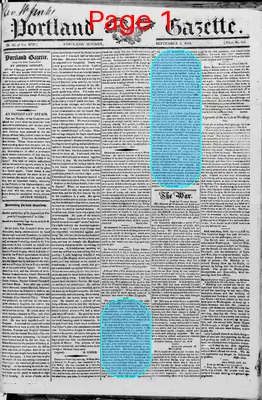
Editorial
September 5, 1814
Event 1 of 2
Portland Gazette, And Maine Advertiser
Portland, Cumberland County, Maine
What is this article about?
Editorial criticizing Oliver Cromwell as the greatest political hypocrite, who feigned republican simplicity to subvert England's government and seize absolute power, quoting Hume on his dissimulation and detailing his expulsion of Parliament to establish despotism. Sourced from Dedham Gazette.
Clipping
OCR Quality
95%
Excellent
Full Text
This is Event 1 of 2. The full text below covers all events in this component.
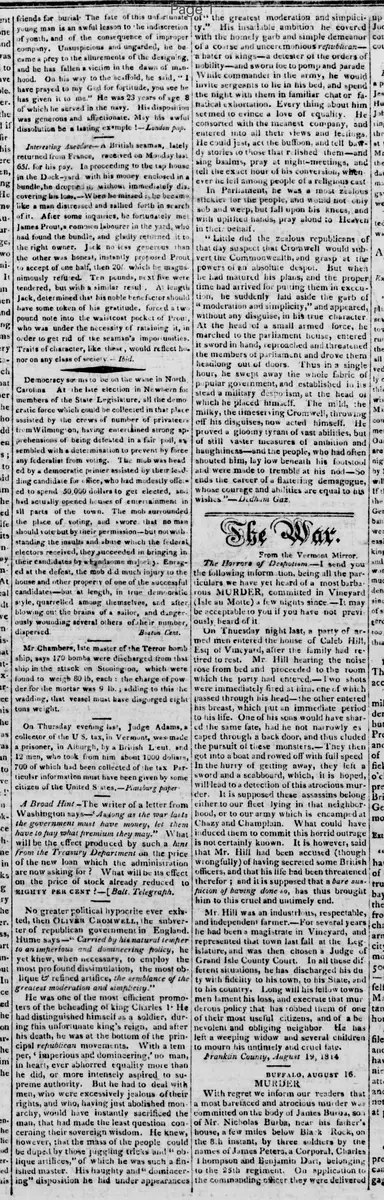
No greater political hypocrite ever existed, than Oliver Cromwell, the subverter of republican government in England. Hume says—"Carried by his natural temper to an imperious and domineering policy, he yet knew, when necessary, to employ the most profound dissimulation, the most oblique & refined artifice, the semblance of the greatest moderation and simplicity." He was one of the most efficient promoters of the beheading of king Charles I. He had distinguished himself as a soldier, during this unfortunate king's reign, and after his death, he was at the bottom of the principal republican movements. With a temper, 'imperious and domineering,' no man, in heart, ever abhorred equality more than he did, or more intensely aspired to supreme authority. But he had to deal with men, who were excessively jealous of their rights, and who, having just abolished monarchy, would have instantly sacrificed the man, that had made the least question concerning their sovereign wisdom. He knew, however, that the mass of the people could be duped by those juggling tricks and "oblique artifices," of which he was such a finished master. His haughty and "domineering" disposition he hid under appearances of "the greatest moderation and simplicity." His insatiable ambition he covered with the homely garb and simple demeanor of a coarse and unceremonious republican—a hater of kings—a detester of the orders of nobility and sworn foe to pomp and parade. While commander in the army, he would invite sergeants to lie in his bed, and spend the night with them in familiar chat or fanatical exhortation. Every thing about him seemed to evince a love of equality. He consorted with the meanest company, and entered into all their views and feelings. He could jest, act the buffoon, and tell bawdy stories to those that relished them and sing psalms, pray at night-meetings, and tell the exact hour of his conversion, whenever he fell among people of a religious cast. In Parliament, he was a most zealous stickler for the people, and would not only sob and weep, but fall upon his knees, and with uplifted hands, pray aloud to Heaven in their behalf.
"Little did the zealous republicans, of that day suspect that Cromwell would subvert the Commonwealth, and grasp at the powers of an absolute despot. But when he had matured his plans, and the proper time had arrived for putting them in execution, he suddenly laid aside the garb of "moderation and simplicity," and appeared, without any disguise, in his true character. At the head of a small armed force, he marched to the parliament house, entered it sword in hand, reproached and threatened the members of parliament and drove them headlong out of doors. Thus in a single hour, he swept away the whole fabric of popular government, and established in its stead a military despotism, at the head of which he placed himself. The mild, the milky, the timeserving Cromwell, throwing off his disguises, now acted himself. He proved a gloomy tyrant of vast abilities, but of still vaster measures of ambition and haughtiness—and the people, who had often shouted him, lay low beneath his footstool and were made to tremble at his nod—So ends the Career of a flattering demagogue, whose courage and abilities are equal to his wishes"—Dedham Gaz.
"Little did the zealous republicans, of that day suspect that Cromwell would subvert the Commonwealth, and grasp at the powers of an absolute despot. But when he had matured his plans, and the proper time had arrived for putting them in execution, he suddenly laid aside the garb of "moderation and simplicity," and appeared, without any disguise, in his true character. At the head of a small armed force, he marched to the parliament house, entered it sword in hand, reproached and threatened the members of parliament and drove them headlong out of doors. Thus in a single hour, he swept away the whole fabric of popular government, and established in its stead a military despotism, at the head of which he placed himself. The mild, the milky, the timeserving Cromwell, throwing off his disguises, now acted himself. He proved a gloomy tyrant of vast abilities, but of still vaster measures of ambition and haughtiness—and the people, who had often shouted him, lay low beneath his footstool and were made to tremble at his nod—So ends the Career of a flattering demagogue, whose courage and abilities are equal to his wishes"—Dedham Gaz.
What sub-type of article is it?
Partisan Politics
Constitutional
What keywords are associated?
Oliver Cromwell
Political Hypocrisy
Republican Government
Military Despotism
Dissimulation
King Charles I
What entities or persons were involved?
Oliver Cromwell
King Charles I
Hume
Dedham Gaz.
Editorial Details
Primary Topic
Critique Of Oliver Cromwell's Political Hypocrisy
Stance / Tone
Strongly Condemnatory Of Cromwell As A Hypocrite And Despot
Key Figures
Oliver Cromwell
King Charles I
Hume
Dedham Gaz.
Key Arguments
Cromwell Was A Political Hypocrite Who Subverted Republican Government
He Employed Dissimulation And Artifice To Hide His Imperious Temper
He Promoted The Beheading Of King Charles I And Led Republican Movements
He Disguised His Ambition With Moderation And Simplicity
He Consorted With Common People To Appear Egalitarian
He Subverted The Commonwealth By Expelling Parliament With Armed Force
He Established Military Despotism And Became A Tyrant