Thank you for visiting SNEWPapers!
Sign up free
Literary
September 5, 1906
The Star
Reynoldsville, Jefferson County, Pennsylvania
What is this article about?
A man promises to read a woman's short story manuscript but loses it, leading to evasion, excuses, and a heartfelt confession of love. She reveals she has a copy, resolving the comedic tension romantically.
Clipping
OCR Quality
98%
Excellent
Full Text
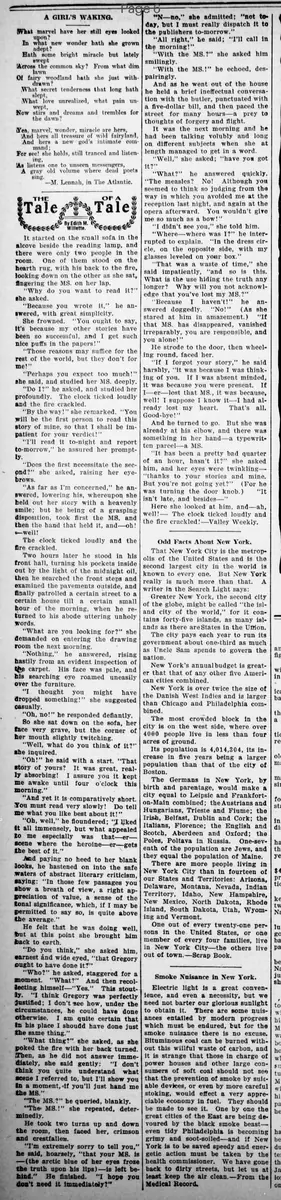
It started on the small sofa in the alcove beside the reading lamp, and there were only two people in the room. One of them stood on the hearth rug, with his back to the fire, looking down on the other as she sat, fingering the MS. on her lap.
"Why do you want to read it?" she asked.
"Because you wrote it," he answered, with great simplicity.
She frowned. "You ought to say, it's because my other stories have been so successful, and I get such nice puffs in the papers!"
"Those reasons may suffice for the rest of the world, but they don't for me!"
"Perhaps you expect too much!" she said, and studied her MS. deeply.
"Do I?" he asked, and studied her profoundly. The clock ticked loudly and the fire crackled.
"By the way!" she remarked. "You will be the first person to read this story of mine, so that I shall be impatient for your verdict!"
"I'll read it to-night and report to-morrow," he assured her promptly.
"Does the first necessitate the second?" she asked, raising her eyebrows.
"As far as I'm concerned," he answered, lowering his, whereupon she held out her story with a heavenly smile; but he being of a grasping disposition, took first the MS. and then the hand that held it, and—oh! well!
The clock ticked loudly and the fire crackled.
Two hours later he stood in his front hall, turning his pockets inside out by the light of the midnight oil, then he searched the front steps and examined the pavements outside, and finally patrolled a certain street to a certain house till a certain small hour of the morning, when he returned to his abode uttering unholy words.
"What are you looking for?" she demanded on entering the drawing room the next morning.
"Nothing," he answered, rising hastily from an evident inspection of the carpet. His face was pale, and his searching eye roamed uneasily over the furniture.
"I thought you might have dropped something!" she suggested casually.
"Oh, no!" he responded defiantly.
So she sat down on the sofa, her face very grave, but the corner of her mouth slightly twitching.
"Well, what do you think of it?" he inquired.
"Oh!" he said with a start. "That story of yours? It was great, really absorbing! I assure you it kept me awake until four o'clock this morning."
"And yet it is comparatively short. You must read very slowly! Do tell me what you like best about it!"
"Oh, well," he floundered; "I liked it all immensely, but what appealed to me especially was that—er—scene where the heroine—er—gets the best of it."
And paying no heed to her blank looks, he hastened on into the safe waters of abstract literary criticism, saying: "In those few passages you show a breath of view, a right appreciation of value, a sense of the tonal significance, which, if I may be permitted to say so, is quite above the average."
He felt that he was doing well, but at this point she brought him back to earth.
"Do you think," she asked him earnest and wide eyed, "that Gregory ought to have done it?"
"Who?" he asked, staggered for a moment. "What?" And then recollecting himself—"Yes." This stoutly. "I think Gregory was perfectly justified: I don't see how, under the circumstances, he could have done otherwise. I am quite certain that in his place I should have done just the same thing."
"What thing?" she asked, as she poked the fire with her back turned.
Then, as he did not answer immediately, she said gently: "I don't think you quite understand what scene I referred to, but I'll show you in a moment,—if you'll just hand me the MS."
"The MS.?" he queried, blankly.
"The MS.!" she repeated, determinedly.
He took two turns up and down the room, then faced her, crimson and crestfallen.
"I'm extremely sorry to tell you," he said, hoarsely, "that your MS. is—" (the arctic blue of her eyes froze the truth upon his lips)—"is left behind." He finished. "I hope you don't need it immediately?"
"N-no," she admitted; "not to-day, but I must really dispatch it to the publishers to-morrow."
"All right," he said; "I'll call in the morning!"
"With the MS.?" she asked him smilingly.
"With the MS.!" he echoed, despairingly.
And as he went out of the house he held a brief ineffectual conversation with the butler, punctuated with a five-dollar bill, and then paced the street for many hours—a prey to thoughts of forgery and flight.
It was the next morning and he had been talking volubly and long on different subjects when she at length managed to get in a word.
"Well," she asked; "have you got it?"
"What?" he answered quickly.
"The measles? No! Although you seemed to think so judging from the way in which you avoided me at the reception last night, and again at the opera afterward. You wouldn't give me so much as a bow!"
"I didn't see you," she told him.
"Where—where was I?" he interrupted to explain. "In the dress circle, on the opposite side, with my glasses leveled on your box."
"That was a waste of time," she said impatiently, "and so is this. What is the use hiding the truth any longer? Why will you not acknowledge that you've lost my MS.?"
"Because I haven't!" he answered doggedly.
"No!" (As she stared at him in amazement.)
"If that MS. has disappeared, vanished irreparably, you are responsible, and you alone!"
He strode to the door, then wheeling round, faced her.
"If I forgot your story," he said harshly, "it was because I was thinking of you. If I was absent minded, it was because you were present. If I—er—lost that MS., it was because, well! I suppose I know it—I had already lost my heart. That's all. Good-bye!"
And he turned to go. But she was already at his elbow, and there was something in her hand—a typewritten parcel—a MS.
"It has been a pretty bad quarter of an hour, hasn't it?" she asked him, and her eyes were twinkling—"thanks to your stories and mine. But you're not going yet?" (For he was turning the door knob.)
"It isn't late, and besides—"
Here she looked at him, and—ah, well!—The clock ticked loudly and the fire crackled!—Valley Weekly.
"Why do you want to read it?" she asked.
"Because you wrote it," he answered, with great simplicity.
She frowned. "You ought to say, it's because my other stories have been so successful, and I get such nice puffs in the papers!"
"Those reasons may suffice for the rest of the world, but they don't for me!"
"Perhaps you expect too much!" she said, and studied her MS. deeply.
"Do I?" he asked, and studied her profoundly. The clock ticked loudly and the fire crackled.
"By the way!" she remarked. "You will be the first person to read this story of mine, so that I shall be impatient for your verdict!"
"I'll read it to-night and report to-morrow," he assured her promptly.
"Does the first necessitate the second?" she asked, raising her eyebrows.
"As far as I'm concerned," he answered, lowering his, whereupon she held out her story with a heavenly smile; but he being of a grasping disposition, took first the MS. and then the hand that held it, and—oh! well!
The clock ticked loudly and the fire crackled.
Two hours later he stood in his front hall, turning his pockets inside out by the light of the midnight oil, then he searched the front steps and examined the pavements outside, and finally patrolled a certain street to a certain house till a certain small hour of the morning, when he returned to his abode uttering unholy words.
"What are you looking for?" she demanded on entering the drawing room the next morning.
"Nothing," he answered, rising hastily from an evident inspection of the carpet. His face was pale, and his searching eye roamed uneasily over the furniture.
"I thought you might have dropped something!" she suggested casually.
"Oh, no!" he responded defiantly.
So she sat down on the sofa, her face very grave, but the corner of her mouth slightly twitching.
"Well, what do you think of it?" he inquired.
"Oh!" he said with a start. "That story of yours? It was great, really absorbing! I assure you it kept me awake until four o'clock this morning."
"And yet it is comparatively short. You must read very slowly! Do tell me what you like best about it!"
"Oh, well," he floundered; "I liked it all immensely, but what appealed to me especially was that—er—scene where the heroine—er—gets the best of it."
And paying no heed to her blank looks, he hastened on into the safe waters of abstract literary criticism, saying: "In those few passages you show a breath of view, a right appreciation of value, a sense of the tonal significance, which, if I may be permitted to say so, is quite above the average."
He felt that he was doing well, but at this point she brought him back to earth.
"Do you think," she asked him earnest and wide eyed, "that Gregory ought to have done it?"
"Who?" he asked, staggered for a moment. "What?" And then recollecting himself—"Yes." This stoutly. "I think Gregory was perfectly justified: I don't see how, under the circumstances, he could have done otherwise. I am quite certain that in his place I should have done just the same thing."
"What thing?" she asked, as she poked the fire with her back turned.
Then, as he did not answer immediately, she said gently: "I don't think you quite understand what scene I referred to, but I'll show you in a moment,—if you'll just hand me the MS."
"The MS.?" he queried, blankly.
"The MS.!" she repeated, determinedly.
He took two turns up and down the room, then faced her, crimson and crestfallen.
"I'm extremely sorry to tell you," he said, hoarsely, "that your MS. is—" (the arctic blue of her eyes froze the truth upon his lips)—"is left behind." He finished. "I hope you don't need it immediately?"
"N-no," she admitted; "not to-day, but I must really dispatch it to the publishers to-morrow."
"All right," he said; "I'll call in the morning!"
"With the MS.?" she asked him smilingly.
"With the MS.!" he echoed, despairingly.
And as he went out of the house he held a brief ineffectual conversation with the butler, punctuated with a five-dollar bill, and then paced the street for many hours—a prey to thoughts of forgery and flight.
It was the next morning and he had been talking volubly and long on different subjects when she at length managed to get in a word.
"Well," she asked; "have you got it?"
"What?" he answered quickly.
"The measles? No! Although you seemed to think so judging from the way in which you avoided me at the reception last night, and again at the opera afterward. You wouldn't give me so much as a bow!"
"I didn't see you," she told him.
"Where—where was I?" he interrupted to explain. "In the dress circle, on the opposite side, with my glasses leveled on your box."
"That was a waste of time," she said impatiently, "and so is this. What is the use hiding the truth any longer? Why will you not acknowledge that you've lost my MS.?"
"Because I haven't!" he answered doggedly.
"No!" (As she stared at him in amazement.)
"If that MS. has disappeared, vanished irreparably, you are responsible, and you alone!"
He strode to the door, then wheeling round, faced her.
"If I forgot your story," he said harshly, "it was because I was thinking of you. If I was absent minded, it was because you were present. If I—er—lost that MS., it was because, well! I suppose I know it—I had already lost my heart. That's all. Good-bye!"
And he turned to go. But she was already at his elbow, and there was something in her hand—a typewritten parcel—a MS.
"It has been a pretty bad quarter of an hour, hasn't it?" she asked him, and her eyes were twinkling—"thanks to your stories and mine. But you're not going yet?" (For he was turning the door knob.)
"It isn't late, and besides—"
Here she looked at him, and—ah, well!—The clock ticked loudly and the fire crackled!—Valley Weekly.
What sub-type of article is it?
Prose Fiction
Satire
Dialogue
What themes does it cover?
Love Romance
Social Manners
What keywords are associated?
Lost Manuscript
Romantic Misunderstanding
Social Flirtation
Humorous Dialogue
Short Story
Literary Details
Key Lines
"If I Forgot Your Story," He Said Harshly, "It Was Because I Was Thinking Of You. If I Was Absent Minded, It Was Because You Were Present. If I—Er—Lost That Ms., It Was Because, Well! I Suppose I Know It—I Had Already Lost My Heart. That's All. Good Bye!"
The Clock Ticked Loudly And The Fire Crackled.