Thank you for visiting SNEWPapers!
Sign up free
Literary
October 21, 1871
The Albany Register
Albany, Linn County, Oregon
What is this article about?
Biographical essay on Sir Walter Scott's indifference to fame and literary courage, shown in his reply to a friend's warning against risking popularity with 'The Lady of the Lake' after 'Marmion's' success, quoting Montrose and affirming resilience.
Clipping
OCR Quality
98%
Excellent
Full Text
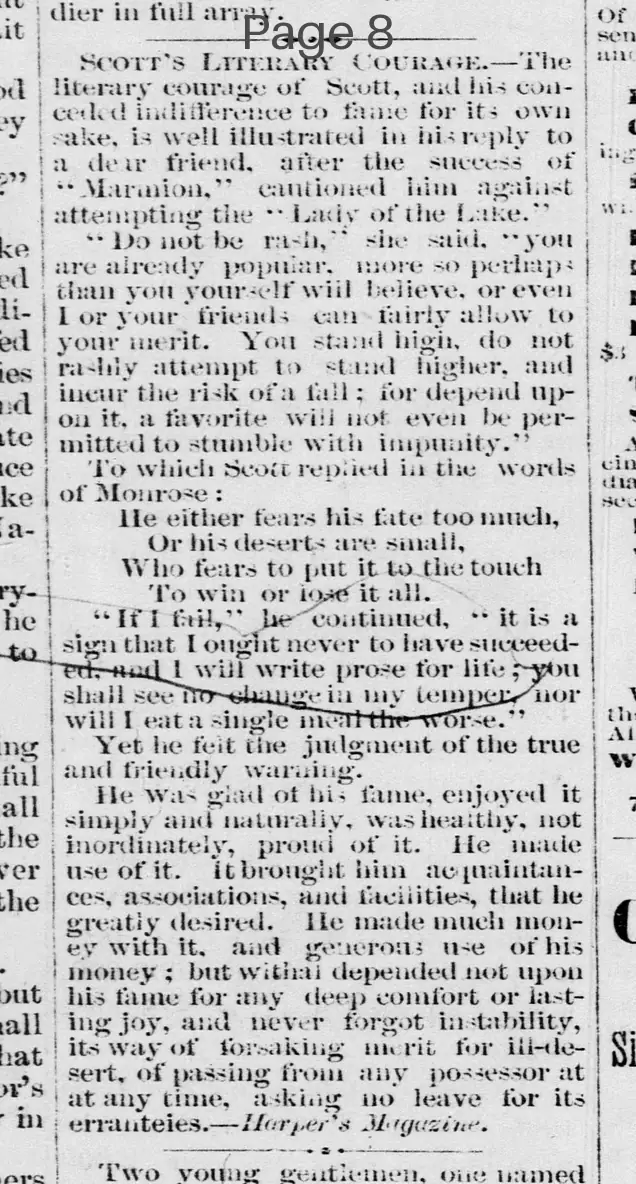
SCOTT'S LITERARY COURAGE.
The literary courage of Scott, and his contented indifference to fame for its own sake, is well illustrated in his reply to a dear friend, after the success of "Marmion," cautioned him against attempting the "Lady of the Lake."
"Do not be rash," she said, "you are already popular, more so perhaps than you yourself will believe, or even I or your friends can fairly allow to your merit. You stand high, do not rashly attempt to stand higher, and incur the risk of a fall; for depend upon it, a favorite will not even be permitted to stumble with impunity."
To which Scott replied in the words of Montrose:
He either fears his fate too much,
Who fears to put it to the touch
To win or lose it all.
"If I fail," he continued, "it is a sign that I ought never to have succeeded.-and I will write prose for life; you shall see no change in my temper nor will I eat a single meal the worse. Yet he felt the judgment of the true and friendly warning. He was glad of his fame, enjoyed it simply and naturally, was healthy, not inordinately, proud of it. He made use of it. It brought him acquaintances, associations, and facilities, that he greatly desired. He made much money with it, and generous use of his money; but withal depended not upon his fame for any deep comfort or lasting joy, and never forgot instability, its way of forsaking merit for ill-desert, of passing from any possessor at any time, asking no leave for its errantries.-Harper's Magazine.
What sub-type of article is it?
Essay
What themes does it cover?
Moral Virtue
What keywords are associated?
Walter Scott
Literary Courage
Fame
Marmion
Lady Of The Lake
Montrose Quote
What entities or persons were involved?
Harper's Magazine
Literary Details
Title
Scott's Literary Courage.
Author
Harper's Magazine
Subject
Scott's Response To A Friend's Caution About Writing 'The Lady Of The Lake' After 'Marmion'
Key Lines
He Either Fears His Fate Too Much,
Who Fears To Put It To The Touch
To Win Or Lose It All.
"If I Fail," He Continued, "It Is A Sign That I Ought Never To Have Succeeded. And I Will Write Prose For Life; You Shall See No Change In My Temper Nor Will I Eat A Single Meal The Worse.