Thank you for visiting SNEWPapers!
Sign up free
Literary
May 26, 1878
Daily Globe
Saint Paul, Ramsey County, Minnesota
What is this article about?
This essay contrasts the lives of Mr. Orton, who rose through hard work and unwavering integrity to lead a major telegraph organization, dying with an unblemished reputation, and Mr. W. T. Hathaway, a promising young businessman whose dishonesty led to ruin, emphasizing the value of honesty over ability.
Clipping
OCR Quality
98%
Excellent
Full Text
The Lesson of Two Lives.
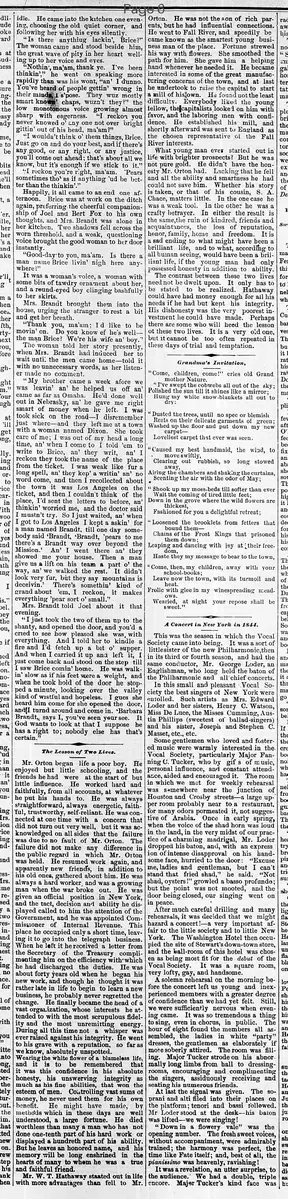
Mr. Orton began life a poor boy. He enjoyed but little schooling, and the friends he had were at the start of but little influence. He worked hard and faithfully, from all accounts, at whatever he put his hands to. He was always straightforward, always energetic, faithful, trustworthy, self-reliant. He was connected at one time with a concern that did not turn out very well, but it was acknowledged on all sides that the failure was due to no fault of Mr. Orton. The failure did not make any difference in the public regard in which Mr. Orton was held. He resumed work again, and apparently new friends, in addition to his old ones, gathered about him. He was always a hard worker, and was a growing man when the war broke out. He was given an official position in New York, and the tact, decision and ability he displayed called to him the attention of the Government, and he was appointed Commissioner of Internal Revenue. This place he occupied only a short time, leaving it to go into the telegraph business. When he left it he received a letter from the Secretary of the Treasury complimenting him on the efficiency with which he had discharged the duties. He was about forty years old when he began his new work, and though he thought it was rather late in life to begin to learn a new business, he probably never regretted the change. He finally became the head of a vast organization, whose interests he attended to with the most scrupulous fidelity and the most unremitting energy.
During all this time not a whisper was ever raised against his integrity. He went to his grave with a reputation, so far as we know, absolutely unspotted. Wearing the white flower of a blameless life, and it is to be remembered that it was this confidence in his absolute honesty, his unswerving integrity as much as his fine abilities, that won the esteem of men. Controlling vast sums of money, he never used them for his own benefit. He might have made, by methods which in these days are well understood, a large fortune. He died worth less than many a man who has not done one-tenth part of his hard work or displayed a hundredth part of his ability. But he leaves an honored name, and his memory will be long enshrined in the hearts of many to whom he was a true and faithful friend.
Mr. W. T. Hathaway started out in life with more advantages than fell to Mr. Orton. He was not the son of rich parents, but he had influential connections. He went to Fall River, and speedily became known as the smartest young business man of the place. Fortune strewed his way with flowers. She smoothed the path for him. She gave him a helping hand whenever he needed it. He became interested in some of the great manufacturing concerns of the town, and at last he undertook to raise the capital to start a mill of his own. He found not the least difficulty. Everybody liked the young fellow, the capitalists looked on him with favor, and the laboring men with confidence. He established his mill, and shortly afterward was sent to England as the chosen representative of the Fall River interests.
What young man ever started out in life with brighter prospects? But he was not pure gold. He didn't have the honesty Mr. Orton had. Lacking that he fell and all the ability and smartness he had could not save him. Whether his story is taken, or that of his cousin, S. A. Chace, matters little. In the one case he was a weak tool. In the other he was a crafty betrayer. In either the result is the same, the ruin of kindred, friends and acquaintances, the loss of reputation, honor, family, home and freedom. It is a sad ending to what might have been a brilliant life, and to what, according to all human seeing, would have been a brilliant life, if the young man had only possessed honesty in addition to ability.
The contrast between these two lives need not be dwelt upon. It only has to be stated to be realized. Hathaway could have had money enough for all his needs if he had but kept his integrity. His dishonesty was the very poorest investment he could have made. Perhaps there are some who will heed the lesson of these two lives. It is a very old one, but it cannot be too often repeated in these days of trial and temptation.
Mr. Orton began life a poor boy. He enjoyed but little schooling, and the friends he had were at the start of but little influence. He worked hard and faithfully, from all accounts, at whatever he put his hands to. He was always straightforward, always energetic, faithful, trustworthy, self-reliant. He was connected at one time with a concern that did not turn out very well, but it was acknowledged on all sides that the failure was due to no fault of Mr. Orton. The failure did not make any difference in the public regard in which Mr. Orton was held. He resumed work again, and apparently new friends, in addition to his old ones, gathered about him. He was always a hard worker, and was a growing man when the war broke out. He was given an official position in New York, and the tact, decision and ability he displayed called to him the attention of the Government, and he was appointed Commissioner of Internal Revenue. This place he occupied only a short time, leaving it to go into the telegraph business. When he left it he received a letter from the Secretary of the Treasury complimenting him on the efficiency with which he had discharged the duties. He was about forty years old when he began his new work, and though he thought it was rather late in life to begin to learn a new business, he probably never regretted the change. He finally became the head of a vast organization, whose interests he attended to with the most scrupulous fidelity and the most unremitting energy.
During all this time not a whisper was ever raised against his integrity. He went to his grave with a reputation, so far as we know, absolutely unspotted. Wearing the white flower of a blameless life, and it is to be remembered that it was this confidence in his absolute honesty, his unswerving integrity as much as his fine abilities, that won the esteem of men. Controlling vast sums of money, he never used them for his own benefit. He might have made, by methods which in these days are well understood, a large fortune. He died worth less than many a man who has not done one-tenth part of his hard work or displayed a hundredth part of his ability. But he leaves an honored name, and his memory will be long enshrined in the hearts of many to whom he was a true and faithful friend.
Mr. W. T. Hathaway started out in life with more advantages than fell to Mr. Orton. He was not the son of rich parents, but he had influential connections. He went to Fall River, and speedily became known as the smartest young business man of the place. Fortune strewed his way with flowers. She smoothed the path for him. She gave him a helping hand whenever he needed it. He became interested in some of the great manufacturing concerns of the town, and at last he undertook to raise the capital to start a mill of his own. He found not the least difficulty. Everybody liked the young fellow, the capitalists looked on him with favor, and the laboring men with confidence. He established his mill, and shortly afterward was sent to England as the chosen representative of the Fall River interests.
What young man ever started out in life with brighter prospects? But he was not pure gold. He didn't have the honesty Mr. Orton had. Lacking that he fell and all the ability and smartness he had could not save him. Whether his story is taken, or that of his cousin, S. A. Chace, matters little. In the one case he was a weak tool. In the other he was a crafty betrayer. In either the result is the same, the ruin of kindred, friends and acquaintances, the loss of reputation, honor, family, home and freedom. It is a sad ending to what might have been a brilliant life, and to what, according to all human seeing, would have been a brilliant life, if the young man had only possessed honesty in addition to ability.
The contrast between these two lives need not be dwelt upon. It only has to be stated to be realized. Hathaway could have had money enough for all his needs if he had but kept his integrity. His dishonesty was the very poorest investment he could have made. Perhaps there are some who will heed the lesson of these two lives. It is a very old one, but it cannot be too often repeated in these days of trial and temptation.
What sub-type of article is it?
Essay
What themes does it cover?
Moral Virtue
What keywords are associated?
Integrity
Honesty
Business Success
Moral Lesson
Biographical Contrast
Failure Dishonesty
Literary Details
Title
The Lesson Of Two Lives.
Subject
Contrast Between The Lives Of Mr. Orton And Mr. W. T. Hathaway
Key Lines
He Went To His Grave With A Reputation, So Far As We Know, Absolutely Unspotted. Wearing The White Flower Of A Blameless Life.
Lacking That He Fell And All The Ability And Smartness He Had Could Not Save Him.
The Contrast Between These Two Lives Need Not Be Dwelt Upon. It Only Has To Be Stated To Be Realized.
His Dishonesty Was The Very Poorest Investment He Could Have Made.
It Is A Very Old One, But It Cannot Be Too Often Repeated In These Days Of Trial And Temptation.