Thank you for visiting SNEWPapers!
Sign up free
Literary
July 22, 1906
Daily Press
Newport News, Virginia
What is this article about?
Article on unusual historical hats, including steeple, sugar loaf, and copotain styles worn in Elizabethan and Jacobean times, with quotes from Stubbs, Heywood's song praising English beaver hats, and Bulwer on their inconveniences. References earls of Morton, Northampton, and Exeter.
Clipping
OCR Quality
95%
Excellent
Full Text
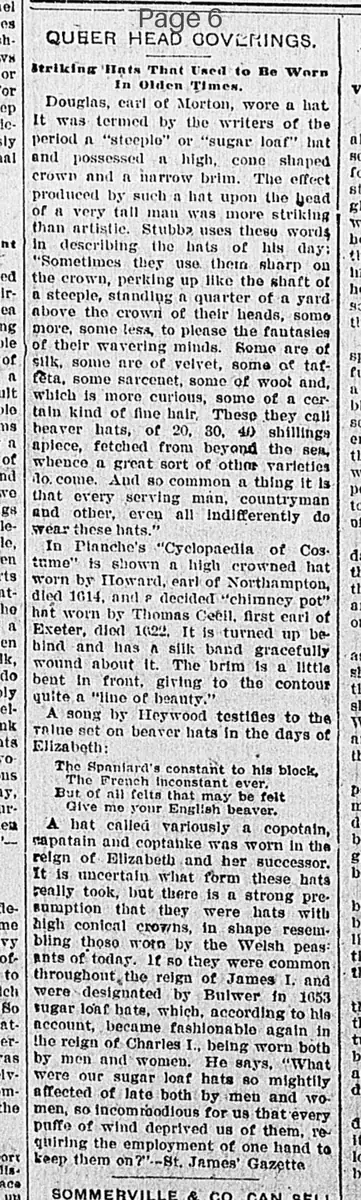
QUEER HEAD COVERINGS.
Striking Hats That Used to Be Worn In Olden Times.
Douglas, earl of Morton, wore a hat It was termed by the writers of the period a "steeple" or "sugar loaf" hat and possessed a high, cone shaped crown and a narrow brim. The effect produced by such a hat upon the head of a very tall man was more striking than artistic. Stubbs uses these words in describing the hats of his day:
"Sometimes they use them sharp on the crown, perking up like the shaft of a steeple, standing a quarter of a yard above the crown of their heads, some more, senseless, to please the fantasies of their wavering minds. Some are of silk, some are of velvet, some of taffeta, some sarcenet, some of wool and, which is more curious, some of a certain kind of fine hair. These they call beaver hats, of 20, 30, 40 shillings apiece, fetched from beyond the sea, whence a great sort of other varieties do come. And so common a thing it is that every serving man, countryman and other, even all indifferently do wear these hats."
In Planche's "Cyclopaedia of Costume" is shown a high crowned hat worn by Howard, earl of Northampton, died 1614, and a decided "chimney pot" hat worn by Thomas Cecil, first earl of Exeter, died 1612. It is turned up behind and has a silk band gracefully wound about it. The brim is a little bent in front, giving to the contour quite a "line of beauty."
A song by Heywood testifies to the value set on beaver hats in the days of Elizabeth:
The Spaniard's constant to his block,
The French inconstant ever.
But of all felts that may be felt
Give me your English beaver.
A hat called variously a copotain, rapatain and copatain was worn in the reign of Elizabeth and her successor. It is uncertain what form these hats really took, but there is a strong presumption that they were hats with high conical crowns, in shape resembling those worn by the Welsh peasants of today. If so they were common throughout the reign of James I. and were designated by Bulwer in 1653 sugar loaf hats, which, according to his account, became fashionable again in the reign of Charles I., being worn both by men and women. He says, "what were our sugar loaf hats so mightily affected of late both by men and women, so incommodious for us that every puff of wind deprived us of them, requiring the employment of one hand to keep them on?" - St. James' Gazette
Striking Hats That Used to Be Worn In Olden Times.
Douglas, earl of Morton, wore a hat It was termed by the writers of the period a "steeple" or "sugar loaf" hat and possessed a high, cone shaped crown and a narrow brim. The effect produced by such a hat upon the head of a very tall man was more striking than artistic. Stubbs uses these words in describing the hats of his day:
"Sometimes they use them sharp on the crown, perking up like the shaft of a steeple, standing a quarter of a yard above the crown of their heads, some more, senseless, to please the fantasies of their wavering minds. Some are of silk, some are of velvet, some of taffeta, some sarcenet, some of wool and, which is more curious, some of a certain kind of fine hair. These they call beaver hats, of 20, 30, 40 shillings apiece, fetched from beyond the sea, whence a great sort of other varieties do come. And so common a thing it is that every serving man, countryman and other, even all indifferently do wear these hats."
In Planche's "Cyclopaedia of Costume" is shown a high crowned hat worn by Howard, earl of Northampton, died 1614, and a decided "chimney pot" hat worn by Thomas Cecil, first earl of Exeter, died 1612. It is turned up behind and has a silk band gracefully wound about it. The brim is a little bent in front, giving to the contour quite a "line of beauty."
A song by Heywood testifies to the value set on beaver hats in the days of Elizabeth:
The Spaniard's constant to his block,
The French inconstant ever.
But of all felts that may be felt
Give me your English beaver.
A hat called variously a copotain, rapatain and copatain was worn in the reign of Elizabeth and her successor. It is uncertain what form these hats really took, but there is a strong presumption that they were hats with high conical crowns, in shape resembling those worn by the Welsh peasants of today. If so they were common throughout the reign of James I. and were designated by Bulwer in 1653 sugar loaf hats, which, according to his account, became fashionable again in the reign of Charles I., being worn both by men and women. He says, "what were our sugar loaf hats so mightily affected of late both by men and women, so incommodious for us that every puff of wind deprived us of them, requiring the employment of one hand to keep them on?" - St. James' Gazette
What sub-type of article is it?
Essay
What themes does it cover?
Social Manners
What keywords are associated?
Historical Hats
Beaver Hats
Sugar Loaf Hats
Elizabethan Fashion
Jacobean Costume
Literary Details
Title
Queer Head Coverings. Striking Hats That Used To Be Worn In Olden Times.
Subject
Historical Hats From Elizabethan And Jacobean Eras
Form / Style
Prose Article On Historical Fashion
Key Lines
"Sometimes They Use Them Sharp On The Crown, Perking Up Like The Shaft Of A Steeple, Standing A Quarter Of A Yard Above The Crown Of Their Heads, Some More, Senseless, To Please The Fantasies Of Their Wavering Minds. Some Are Of Silk, Some Are Of Velvet, Some Of Taffeta, Some Sarcenet, Some Of Wool And, Which Is More Curious, Some Of A Certain Kind Of Fine Hair. These They Call Beaver Hats, Of 20, 30, 40 Shillings Apiece, Fetched From Beyond The Sea, Whence A Great Sort Of Other Varieties Do Come. And So Common A Thing It Is That Every Serving Man, Countryman And Other, Even All Indifferently Do Wear These Hats."
The Spaniard's Constant To His Block,
The French Inconstant Ever.
But Of All Felts That May Be Felt
Give Me Your English Beaver.
What Were Our Sugar Loaf Hats So Mightily Affected Of Late Both By Men And Women, So Incommodious For Us That Every Puff Of Wind Deprived Us Of Them, Requiring The Employment Of One Hand To Keep Them On?